
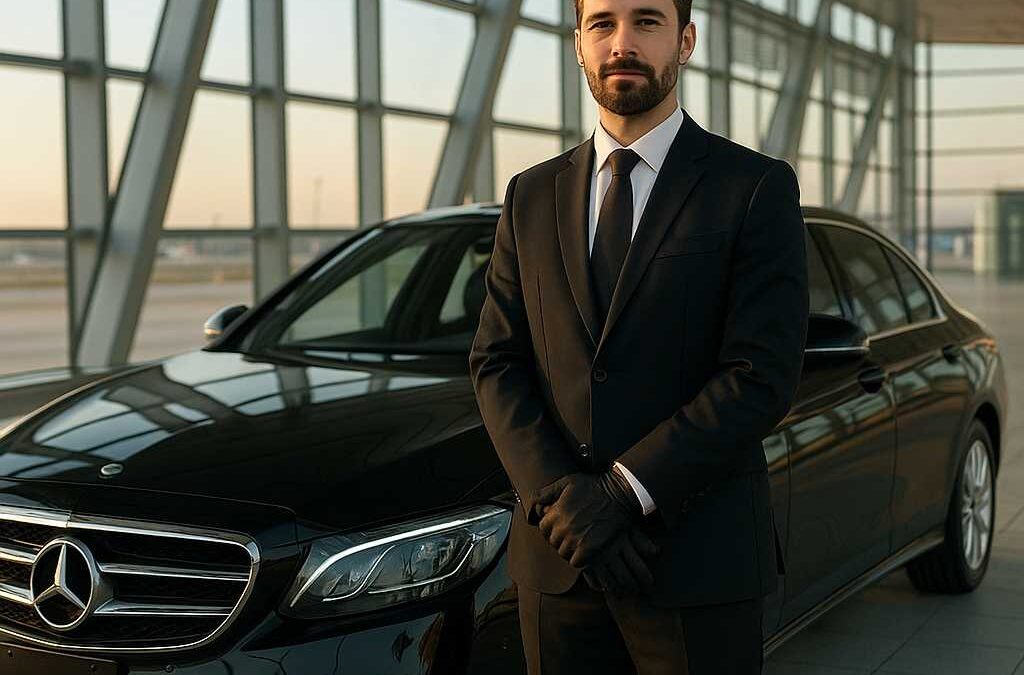
Most people assume a chauffeur is just a driver with a nicer car. That assumption costs executives wasted time, missed connections, and uncomfortable rides. The difference between a trained professional chauffeur Bay Area and a rideshare driver wearing a collared shirt is enormous, and it shows up in every single detail of the service. At iBlack Limo, those details are not optional extras. They are the baseline standard that every chauffeur must meet before they ever pick up a client.
Table of Contents
- Why Professional Chauffeur Standards Actually Matter
- Quick Takeaways
- Training, Licensing, and Certification Requirements
- Deep Local Route Knowledge and Traffic Intelligence
- Vehicle Presentation and Mechanical Readiness
- Client Discretion and Executive-Level Confidentiality
- Airport Transfer Protocols at SFO, OAK, and SJC
- How iBlack Limo Stacks Up: A Direct Comparison
- The Soft Skills That Separate Good From World-Class
- Frequently Asked Questions
- References
Why Professional Chauffeur Standards Actually Matter
Corporate travelers in the Bay Area are not spending premium rates on a vehicle. They are spending them on certainty. Certainty that the car will be on time, that the driver will know where to go without fumbling with a phone, and that the ride will be silent when silence is needed. According to a 2023 Statista survey on business travel preferences, 68 percent of frequent corporate travelers rank reliability as the single most important factor in choosing ground transportation, ranking it above price and vehicle quality.
When a tech executive is being driven from SFO to a board meeting in Palo Alto, every wasted minute is a measurable cost. A world-class chauffeur eliminates variables before they become problems.
Quick Takeaways
| Key Insight | Explanation |
|---|---|
| Chauffeurs are not just drivers | iBlack Limo chauffeurs complete professional training covering etiquette, route intelligence, and emergency protocols, not just vehicle operation. |
| Flight tracking is non-negotiable | Every airport pickup at SFO, OAK, and SJC is supported by real-time flight monitoring so the chauffeur adjusts without the client lifting a finger. |
| Vehicle cleanliness is a performance metric | iBlack Limo vehicles are inspected before every trip. A dirty car is treated as a service failure, not a cosmetic issue. |
| Confidentiality is a hard requirement | Chauffeurs serving executives and VIPs operate under strict discretion standards. What happens in the vehicle stays there. |
| Soft skills matter as much as driving skill | Knowing when to speak, when to stay silent, and how to handle a stressed executive is a learned skill that separates world-class service from average service. |
| Local route mastery beats GPS dependence | Bay Area chauffeurs must know real-time traffic patterns around I-280, Highway 101, and the Bay Bridge corridors from memory, not just from an app. |
| Uniform and presentation standards are enforced | iBlack Limo chauffeurs dress to a defined code on every shift. Appearance is part of the product clients are paying for. |
Training, Licensing, and Certification Requirements
A California Class C license is the legal minimum to operate a passenger vehicle. It is nowhere near sufficient for a professional chauffeur role at the level iBlack Limo demands. Every chauffeur at iBlack Limo holds a valid California Class B or C license with a passenger endorsement, carries a current Medical Examiner’s Certificate, and passes both a criminal background check and a DMV pull-notice enrollment before their first shift.
Behind the Wheel Training Hours
In practice, licensing paperwork tells you very little about how someone actually drives. iBlack Limo chauffeurs complete supervised route training specific to Bay Area geography, including Peninsula corridors, South Bay tech campuses, downtown San Francisco, and the Marin headlands approaches. New chauffeurs shadow experienced drivers before handling solo pickups.
This is not standard industry practice. Most black car operators consider a clean driving record sufficient. iBlack Limo does not.
Customer Service and Protocol Training
Chauffeurs also complete service protocol training covering meet-and-greet procedures, luggage handling, door etiquette, and communication standards. This includes learning how to greet a client at a terminal without being loud or intrusive, how to handle a delayed flight without showing frustration, and how to manage a situation when a client is on an important phone call and needs absolute quiet.
Pro tip: When booking a luxury driver service San Francisco, ask the operator directly whether their chauffeurs go through any training beyond state licensing requirements. The answer will tell you everything about the quality of service you will receive.


Deep Local Route Knowledge and Traffic Intelligence
The Bay Area is one of the most complex ground transportation environments in the United States. The combination of multiple bridge chokepoints, aggressive tech campus commuter traffic, inconsistent surface street grids, and rapidly shifting construction zones makes GPS-only navigation a liability. A driver staring at a phone screen is reacting. A trained chauffeur is anticipating.
Bay Area Traffic Patterns a Chauffeur Must Know Cold
Highway 101 southbound from SFO during mid-morning is predictably slow between the Millbrae interchange and the 92 split. A prepared chauffeur routes around this proactively, not after the delay appears on Waze. The same applies to the Bay Bridge westbound approach during afternoon hours, and the 101-85 merge near Mountain View during Google and Apple shift changes.
iBlack Limo chauffeurs are evaluated on their ability to name and explain alternate routes without prompting. This is a specific and testable skill, not a vague quality standard.
Real-Time Adaptation Without Passenger Involvement
A common mistake made by lesser services is involving the client in routing decisions. A client should never hear the words “there is traffic, which way do you want to go?” That question transfers a service problem to the person who paid to avoid service problems. iBlack Limo chauffeurs are trained to make routing decisions independently and communicate only the outcome, not the deliberation.
“The mark of a truly professional driver is not how they handle a smooth run. It is how invisible they make the problems they solve before the passenger notices them.” — Harvard Business Review, on service quality in high-touch industries
Vehicle Presentation and Mechanical Readiness
The fleet at iBlack Limo includes Mercedes-Benz Sedans, Cadillac Escalade SUVs, a 14-Passenger Luxury Sprinter Van, a 12-Passenger Limo Sprinter, and a 28-Passenger Mini Coach. Every vehicle in that fleet is maintained to manufacturer-specified service intervals and inspected before each trip, not each week.
Pre-trip inspections cover tire pressure, fluid levels, exterior cleanliness, interior presentation, climate control function, and charge levels on any client-facing electronics. This is not a checklist that gets signed without being completed. Skipping an inspection step is a terminable offense under iBlack Limo’s operational standards.
Why Vehicle Condition Is a Reflection of Chauffeur Standards
In a luxury car service, the vehicle and the chauffeur are a single product. A chauffeur who arrives in an immaculate Mercedes-Benz and greets the client with a pressed uniform is communicating something specific: this person cares about the details. That perception directly affects client trust, particularly for first-time corporate clients evaluating whether to make iBlack Limo their regular Bay Area ground transportation partner.
Pro tip: When evaluating any luxury driver service San Francisco, look at the quality of the vehicle photos on the company’s website. Blurry photos, mismatched stock images, or vehicles that look slightly dated are signals that the fleet maintenance standard matches the photo standard.
Client Discretion and Executive-Level Confidentiality
Silicon Valley runs on information asymmetry. A senior Apple engineer being driven to a confidential product meeting at a third-party location does not want their chauffeur knowing, remembering, or mentioning that trip to anyone. This is not paranoia. This is a real operational requirement for executives at Google, Meta, Salesforce, and every law firm and investment bank operating in the Bay Area.
iBlack Limo chauffeurs are specifically trained on confidentiality protocols. They do not ask about the purpose of a trip. They do not initiate personal conversation unless the client does. They do not take or make personal calls while carrying a passenger. Client information is never discussed with other drivers, dispatchers, or anyone outside the operational chain of custody required to complete the booking.
The No-Oversharing Rule
This extends beyond the ride itself. A chauffeur who has driven a notable executive should not be mentioning that fact to anyone, ever. The data consistently shows that high-net-worth and executive clients return to services where they felt their privacy was respected. For iBlack Limo clients, discretion is not a perk. It is the foundation of the relationship.

Airport Transfer Protocols at SFO, OAK, and SJC
Airport pickups are where the difference between a professional chauffeur and a casual driver is most visible. At SFO, OAK, and SJC, iBlack Limo follows a specific protocol that eliminates the three most common failure points in airport ground transportation: the driver not knowing the flight status, the driver being in the wrong terminal, and the driver being unreachable when the client lands.
Flight Tracking as a Service Standard
Every iBlack Limo airport pickup is supported by active flight tracking. When a flight is delayed 40 minutes, the chauffeur adjusts their arrival time accordingly. The client never needs to send an update text or worry about finding their driver after an extended wait at baggage claim. This is not a technology differentiator. It is a basic professional obligation that many services do not meet.
Meet-and-Greet Execution
At the designated meeting point, the chauffeur holds a name sign and is positioned at the correct exit before the client clears customs or baggage. For international arrivals at SFO Terminal A and G, this means accounting for customs processing time and being ready early rather than on-time. The chauffeur takes luggage, opens the door, confirms the destination, and then stays quiet until the client sets the tone for the ride. This is the meet-and-greet standard. It is non-negotiable.
How iBlack Limo Stacks Up: A Direct Comparison
The Bay Area black car market includes a range of operators from app-based platforms to traditional limousine companies. Not all operate to the same standard. The table below compares three common service models on the criteria that matter most to corporate and executive travelers.
| Service Standard | App-Based Black Car Platforms | iBlack Limo |
|---|---|---|
| Chauffeur training beyond licensing | None required. Driver onboarding is document verification only. | Structured route training, etiquette protocol, and supervised hours before solo service. |
| Flight tracking for airport pickups | Inconsistent. Driver relies on client notification. | Active flight monitoring on every booking. Chauffeur adjusts without client input. |
| Vehicle inspection cadence | Not standardized. Condition varies by individual driver. | Pre-trip inspection before every single ride. Fleet maintained to manufacturer service schedules. |
| Confidentiality standards | No formal policy for drivers beyond general terms of service. | Explicit confidentiality training. No discussion of client movements or destinations outside operational need. |
| Cancellation flexibility for corporate clients | Standard flat-rate cancellation penalties. | Flexible cancellation policies designed around corporate travel schedules and last-minute changes. |
The Soft Skills That Separate Good From World-Class
Technical driving ability, route knowledge, and vehicle maintenance are necessary conditions for a professional chauffeur. They are not sufficient. The chauffeurs who clients specifically request by name, the ones who build long-term relationships with corporate accounts, are the ones who have mastered the human side of the role.
Reading the Client Without Asking Questions
A client who enters the vehicle, puts in earbuds, and opens a laptop wants silence and speed. A client who greets the chauffeur by name and asks how the traffic is wants light conversation. A chauffeur who reads that difference correctly on the first ride will be requested on every future booking. A chauffeur who misreads it and chatters at the executive with earbuds in will not be requested again.
In practice, chauffeurs at iBlack Limo are trained to read entry behavior, body language, and tone in the first 30 seconds and match service style accordingly. This is a teachable skill, but only if an operator invests in the training.
Handling Stress Without Transferring It
Bay Area traffic creates stress. A delayed flight, a sudden route closure on 101, a client who is running late for a critical meeting. A world-class chauffeur absorbs that stress and presents calm certainty to the client. Saying “we have a situation but I have an alternate route and we will be on time” is entirely different from saying “the traffic is terrible, I do not know what happened.” The first answer reassures. The second transfers anxiety.
This is the standard iBlack Limo holds its team to on every run, for every client, from a solo executive in a Mercedes-Benz Sedan to a 28-passenger corporate group in the Mini Coach heading to a Silicon Valley offsite.
Frequently Asked Questions
What qualifications does a professional chauffeur in the Bay Area need to have?
At minimum, a valid California driver’s license with passenger endorsement and a clean DMV record are legal requirements. For premium services like iBlack Limo, chauffeurs also complete professional training in route knowledge, client etiquette, airport protocols, and confidentiality standards. Background checks and regular DMV record monitoring are also standard.
How is iBlack Limo different from using a rideshare black car option?
Rideshare black car options use gig-economy drivers who are vetted for basic licensing but receive no service training. iBlack Limo chauffeurs are professionally trained employees held to defined operational standards covering vehicle presentation, client discretion, flight tracking, and service protocol. The product is fundamentally different even when the vehicle looks similar.
Does iBlack Limo track flights for airport pickups at SFO, OAK, and SJC?
Yes. Active flight tracking is part of every airport transfer booking with iBlack Limo. The chauffeur monitors the flight status and adjusts their arrival accordingly. Clients are not responsible for notifying the driver of delays or early arrivals.
What happens if my flight is significantly delayed or cancelled?
iBlack Limo’s flexible cancellation and adjustment policies are built around the reality of corporate travel schedules. When a flight is delayed, the chauffeur adapts in real time. For cancellations or major schedule changes, clients can contact iBlack Limo directly and the situation is handled without rigid penalty structures that ignore legitimate travel disruptions.
Can iBlack Limo handle recurring corporate travel accounts for Bay Area tech companies?
Yes. iBlack Limo regularly serves employees and executives from Bay Area tech companies including those based in Silicon Valley, San Francisco, and the greater Bay Area. Corporate accounts can book for recurring airport transfers, roadshows, executive ground transportation, and group travel using the Sprinter vans or Mini Coach. The service is available 24 hours a day, 7 days a week.
What does chauffeur training standards mean in real terms for a client?
It means the driver knows the route before departure, manages logistics without burdening the client, maintains vehicle and personal presentation standards, and handles unexpected situations with composure. Chauffeur training standards are the difference between a service that works under ideal conditions and one that performs reliably under any conditions.
Have you experienced the difference between a trained professional chauffeur and an untrained driver on a critical business trip? Share what mattered most to you in the comments below.
References
- Forbes coverage of executive travel standards and corporate ground transportation trends
- Statista data on business traveler preferences and ground transportation reliability rankings
- U.S. Department of Transportation regulations for passenger carrier licensing and commercial driver requirements
- McKinsey research on service quality, client trust, and premium brand differentiation in mobility services
- Harvard Business Review analysis of high-touch service industries and the measurable impact of professional training on customer loyalty